


How two CPaaSAA Grow Members — Shush and Nabstract — are powering telco-led innovation
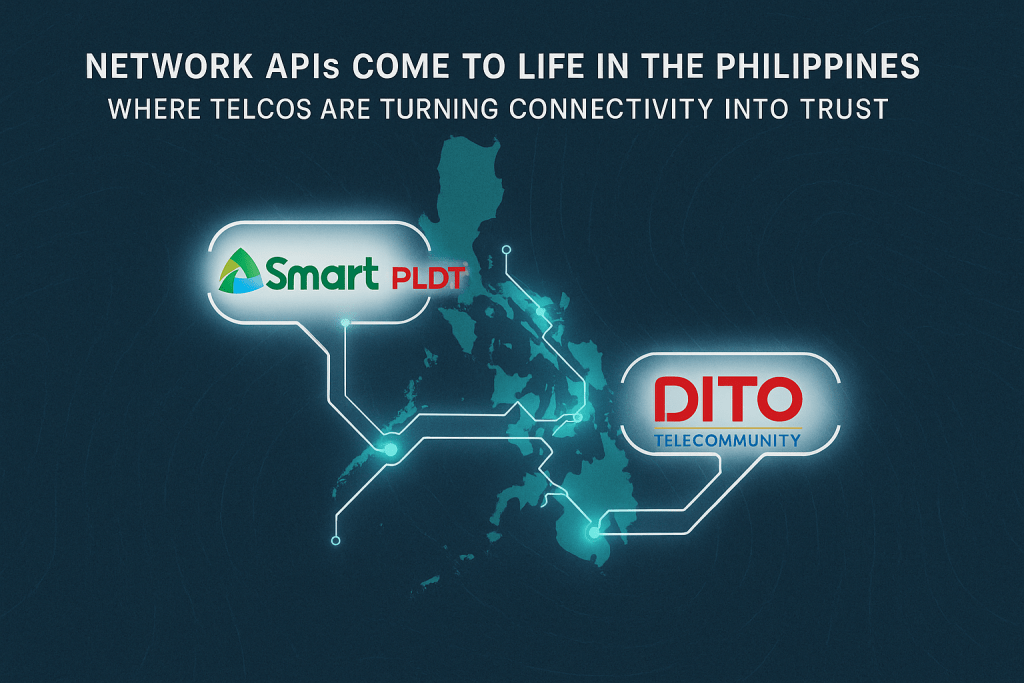
Network APIs are finally moving from theory to reality — and one of the most active proving grounds right now is the Philippines. Within just a few months, two of the country’s leading operators, DITO Telecommunity and Smart/PLDT, have each launched initiatives that showcase what’s possible when telcos expose network intelligence to developers and enterprises.
Both projects share another common thread: they’re being driven by CPaaS Acceleration Alliance Grow Members — Shush and Nabstract.io — proving that our ecosystem is helping make telco transformation tangible.
DITO Verified and Shush: The First Commercial Deployment
In October, DITO Telecommunity unveiled DITO Verified, built in partnership with Shush, the global platform enabler specializing in Carrier network-level authentication and digital trust — and a proud CPaaSAA Grow Member.
The launch includes eight GSMA CAMARA-Certified and compliant APIs — covering capabilities such as Number Verify, SIM Swap, Silent Network Authentication (SNA), Device Status, TS-43/Number Verify 2.0 and Roaming status — plus an additional 39 carrier APIs from Shush’s broader platform.
The pilot phase alone features 18 APIs across categories including:
- Authentication & Zero Trust – Device Authentication, Silent Authentication, Zero Trust Silent Authentication, and TS.43 / Verify 2.0
- Number & SIM Intelligence – Number Verification, SIM Swap Date, and Date Verification
- Device & Network Context – Device Status, Connectivity, Roaming, Routing, and Call Forwarding indicators
- Subscriber & Account Data – Name Verification, Account Status, Porting Status, and Activation Dates
Most significantly, Twilio has already signed to be the first customer to use DITO Verified’s making it the only telco API program in the Philippines with a commercial deployment and real traffic today.
DITO Verified’s ambition is to make network-level identity a core component of digital trust in one of Southeast Asia’s fastest-growing digital markets. By enabling silent, SIM-based, and cryptographically secure authentication, the solution allows banks, fintechs, and e-commerce platforms to eliminate SMS OTPs and reduce fraud at scale.
For Shush, this is a milestone moment — proving that a carrier-grade, developer-friendly API platform can move from concept to customer in under a year. It also sets a benchmark for GSMA Open Gateway implementations worldwide: real APIs, real customers, real results.
Smart/PLDT and Nabstract: Building the Foundations
Meanwhile, Smart/PLDT is pursuing a different strategy: building the foundations for enterprise-scale exposure through its SmartSafe initiative with Nabstract.io, also a CPaaSAA Grow Member.
SmartSafe aims to help enterprises combat fraud and improve user authentication through telco-driven insights. The first API in active use is Header Enrichment, allowing businesses to identify subscribers securely during online transactions.
Other APIs — including SilentAccess, NetIdentity, GeoCheck, and KYCPlus — are currently under development and testing. Together, these will form a suite for fraud management and customer verification, built on Nabstract’s Service Exposure Platform (SEP).
While Smart’s current footprint is narrower, the partnership represents an essential foundation step: turning internal network capabilities into standardized, programmable assets that enterprises can consume.
“It’s the start of a longer journey — from network intelligence to commercial product,” said a senior Nabstract executive.
Why the Philippines Is Leading the Way
It’s no coincidence that both of these launches happened here. The Philippines has become one of the most dynamic testbeds for Network APIs — driven by a mix of market needs, regulatory pressure, and cultural readiness:
- A mobile-first, fintech-hungry market – With over 160 million mobile subscriptions and fast-growing digital banking and e-commerce sectors, the demand for frictionless, fraud-resistant authentication is enormous.
- A real fraud and identity-theft problem – Rising SIM-swap and phishing incidents have pushed regulators like the Bangko Sentral ng Pilipinas (BSP) and the Department of ICT to push for stronger authentication mechanisms.
- Telcos competing on innovation, not just coverage – As connectivity margins tighten, operators like DITO, Smart, and Globe are seeking new revenue sources through digital services and enterprise APIs.
- A collaborative ecosystem that moves fast – The Philippines has a uniquely agile innovation culture where telcos, startups, and enterprises co-create quickly. That speed enables real-world deployments in months, not years.
- Regional visibility and replication potential – Success stories in Manila are easily replicated across Southeast Asia. The Philippines is fast becoming a launchpad for APAC Network API commercialization.
Two Paths, One Momentum
DITO and Smart are taking different routes toward the same destination.
DITO and Shush are demonstrating full-stack execution: CAMARA compliance, a broad proprietary API portfolio, and live enterprise traffic. Smart and Nabstract are building exposure capabilities and partnerships that lay the groundwork for scalable API monetization.
Both are vital steps on the same journey — proof that telco transformation doesn’t follow a single template, but thrives through diversity and experimentation.
The Bigger Picture: APAC’s Lead in Network APIs
Across Asia-Pacific, operators are moving fast: Telin + IPification in Indonesia, SKT–KT–LG Uplus in Korea, and Singtel in Singapore are all developing network API strategies.
But the Philippines now stands out for one simple reason — it has live enterprise adoption.
For the global ecosystem, DITO Verified is a milestone. For the Philippines, it’s validation that telcos can monetize trust. And for the CPaaSAA community, it’s proof that our members are leading this next chapter — where connectivity, identity, and intelligence converge.