
The telecommunications industry stands at a crossroads, propelled forward by the rapid advancement of technology and the advent of artificial intelligence (AI). As the industry evolves with the emergence of 5G and the anticipation of 6G, the Internet of Things (IoT), hyper-scalers, and software-defined everything, telecom companies face both unprecedented challenges and unparalleled opportunities. In this blog, we explore the profound impact of AI on the telecom sector and how it can be leveraged to transform the industry, making it more relevant and resilient in the face of disruption.
The Challenges
The telecom industry grapples with a myriad of challenges in the wake of rapid technological advancements:
The Telecom industry and CSPs are experiencing rapid technological advancement. According to Statista, global IoT devices are projected to reach more than 7 billion by 2030, driving the demand for more robust and scalable network infrastructure.

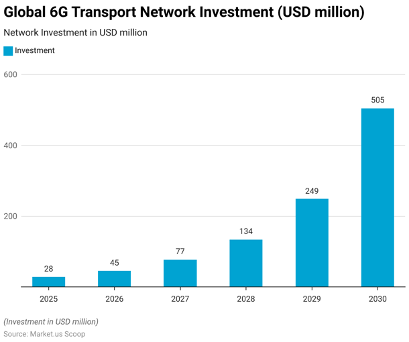
The proliferation of edge enabled IoT devices, driven by the advent of Industry 4.0 innovations, is shaping the ongoing discussions about 6G. A central theme is emerging around the advancement of machine-to-machine communications and the increasing investments in 6G transport networks to support it, projected to exceed $500 Million by 2030.
Similarly, Hyperscale Data Center capacity is growing rapidly to meet the exploding demand driven by AI development and deployments. These cloud providers have been increasingly competing directly with CSPs since the pandemic and may be reaching a global tipping point in 2024 where some buyers of connectivity services could see cloud companies as possible alternatives to CSPs for multiple services, potentially eroding revenues and profits. In fact, Precedence Research has recently published a report projecting a rapid growth of Hyperscalers market exceeding $900 Billion by 2032.

This rapidly changing technology environment demands a workforce with a diversity of skills, but experts are concerned the Telcom talent pool is alarmingly drying up. A myriad of converging factors impact the telco talent shortage. The ageing Telcom workforce and the impending mass retirements of the most experienced among them is depleting the skills and knowledge base in this industry.
With a significant portion of the telecom workforce nearing retirement, there’s a pressing need to capture and transfer institutional knowledge to the next generation of employees. According to statistics published by the European Commission, the share of people aged 55 years or more employed in the EU-27 increased from 12% to 20% between 2004 and 2019. But how does the ageing workforce affect business in concrete terms? According to data published by the IMF, we’ll be looking at a shortage of 85 million tech workers going up to the next decade. Perhaps even more astoundingly, this will translate to a loss of $8.5 trillion USD!
While long-tenure full-time employees are experienced in traditional telecom settings, the rapid shift to SDN/NFV in areas such as 5G and IoT requires a different set of skills. These include knowledge of cloud, virtualization, containerization such as Kubernetes and Docker, Open RAN, network protocols, big data, analytics, and other AI technologies. In fact, Vodafone anticipates that by 2025, more than 50% of its employees will work in software engineering.
Telcos are also competing for talent with industries including the rapidly growing areas of AI, generative AI and machine learning. Companies are all vying for the same limited AI talent pool, while at the same time employees, mostly gen-Z and millennials, are more attracted to new age technology companies and startups that are perceived to be more agile and fast moving than the mature telco industry.
Sophisticated, Tech-Savvy, and Demanding Customers: Today’s customers expect seamless connectivity, personalized services, and immediate resolution to their queries and concerns.
Brittle and Unscalable Processes: Legacy systems and outdated processes hinder agility and innovation, impeding the industry’s ability to adapt to evolving market dynamics.
Act 2: The Opportunities for Transformation
Amidst these challenges lie significant opportunities for transformation through AI. In fact, the Generative AI in Telecom market is projected to approach $5 Billion, more than 20 times what it was last year.

AI-Enhanced Customer Experience: Telecom companies can harness AI to deliver personalized experiences, predictive maintenance, and proactive customer support. For instance, Vodafone’s AI-powered digital assistant, TOBi, handles over 500,000 customer interactions per month, improving response times and customer satisfaction.

AI-Augmented Employees: AI-driven tools and analytics empower employees to make data-driven decisions, automate repetitive tasks, and streamline operations. AT&T leverages AI to optimize network performance, reducing costs and enhancing efficiency.
Automation and AI are critical tools for telecom companies to run efficient operations and deal with a shrinking talent pool. Of particular interest is the use of AI in network operations automation. Indeed, AI assisted network configuration allows for the automation of tedious tasks and augmenting the human operator’s knowledge, thus reducing the need specialized skillsets. Any network technician can use a smart phone with a camera and an AI app to identify the equipment and get context-specific instructions for completing the task at hand, ultimately meeting customer expectations with less specialized manpower.

AI-Enabled Security and Safety: With cyber threats on the rise, AI plays a crucial role in detecting anomalies, mitigating risks, and safeguarding sensitive data. Telefonica utilizes AI-based threat detection systems to protect its networks from cyber-attacks, ensuring uninterrupted service for its customers.


Act 3: Rising to the Challenge
To capitalize on the opportunities presented by AI, telecom companies and CSPs must address key considerations around AI readiness of your teams and your organization while planning for compliance with emerging AI regulations.
Organizational and Staff AI Readiness: While 2023 launched generative AI (Gen AI) into the world with ChatGPT, 2024 is expected to see CSPs bringing the Gen AI proofs of concept they’ve been developing into the market. Data readiness is emerging as a critical success factor. This will require CSPs to better understand the costs and risks of data conditioning and governance, training foundational models, running inference at scale, and building guardrails to minimize errors and hallucinations. Many are already zeroing in on which kinds of data enable the best Gen AI use cases for their businesses. They will likely also look more closely at their data quality, security, and governance, and the implications of sharing it all with cloud providers.
Investing in AI education and training programs ensures that employees possess the requisite skills to leverage AI effectively. According to a report by McKinsey, companies that prioritize AI upskilling initiatives are more likely to achieve successful AI implementations.
AI Regulatory Landscape: With the recent introduction of the EU AI Act, telecom companies must navigate a complex regulatory environment governing the deployment of AI-based solutions. Compliance with regulations is paramount to maintaining trust and credibility among customers and stakeholders.
Conclusion:
The advent of AI heralds a new era of innovation and disruption in the telecom industry. By harnessing the power of AI to navigate these turbulent waters, telecom companies can not only survive but thrive in the emerging AI-driven landscape. From enhancing customer experiences to augmenting employee productivity and ensuring security and compliance, AI holds the key to transforming telecom into a more resilient and relevant industry.
In an increasingly interconnected world, the ability to harness AI for better security and customer trust is paramount. As telecom providers embrace AI-driven solutions, they pave the way for a future where innovation knows no bounds, and connectivity becomes more seamless than ever before.

Ali Bouhouch
Ali Bouhouch is an accomplished technology executive with over 20 years of success in leading consulting, software and data engineering teams delivering cutting-edge solutions in e-Commerce, AdTech, BI and Advanced Analytics. Deep experience leveraging Cloud, Big Data, In-Memory Processing and Cognitive Computing to drive success throughout the customer journey in digital marketing and retail. Demonstrated ability to create and articulate strategic direction at all levels; from obtaining buy-in from board members to aligning individual team members and stakeholders with achievable goals. Valuable member of the senior executive team known for a consultative, data and results driven, customer focused approach. Champion of agile methodologies in both software development and the enterprise.
Ali is a trusted leader who builds and inspires culturally diverse and geographically distributed teams to deliver results aligned with customer expectations. Full responsibility for P&L and international multi-million dollar budgets.
.
Ali is a co-author of the “B2B Solutions Using WebSphere Business Connection” IBM Redbook and was the founder and chairman of multiple professional forums like the XML/WebServices SIG at http://www.ebig.org.
Comments are closed